
Executive Summary
A San Diego couple converted a rental they owned since 2014 into a primary residence, satisfied the 2‑of‑5‑year use test, and sold in March 2026. The conversion reduced headline federal tax versus an immediate rental sale, but depreciation recapture and the nonqualified‑use rule materially limited the §121 exclusion. This June 2026 update adds current enforcement context, digital‑first documentation practices, an illustrative after‑tax net proceeds estimate for a California seller, and practical sequencing alternatives to manage cash‑flow and estate objectives.
Background
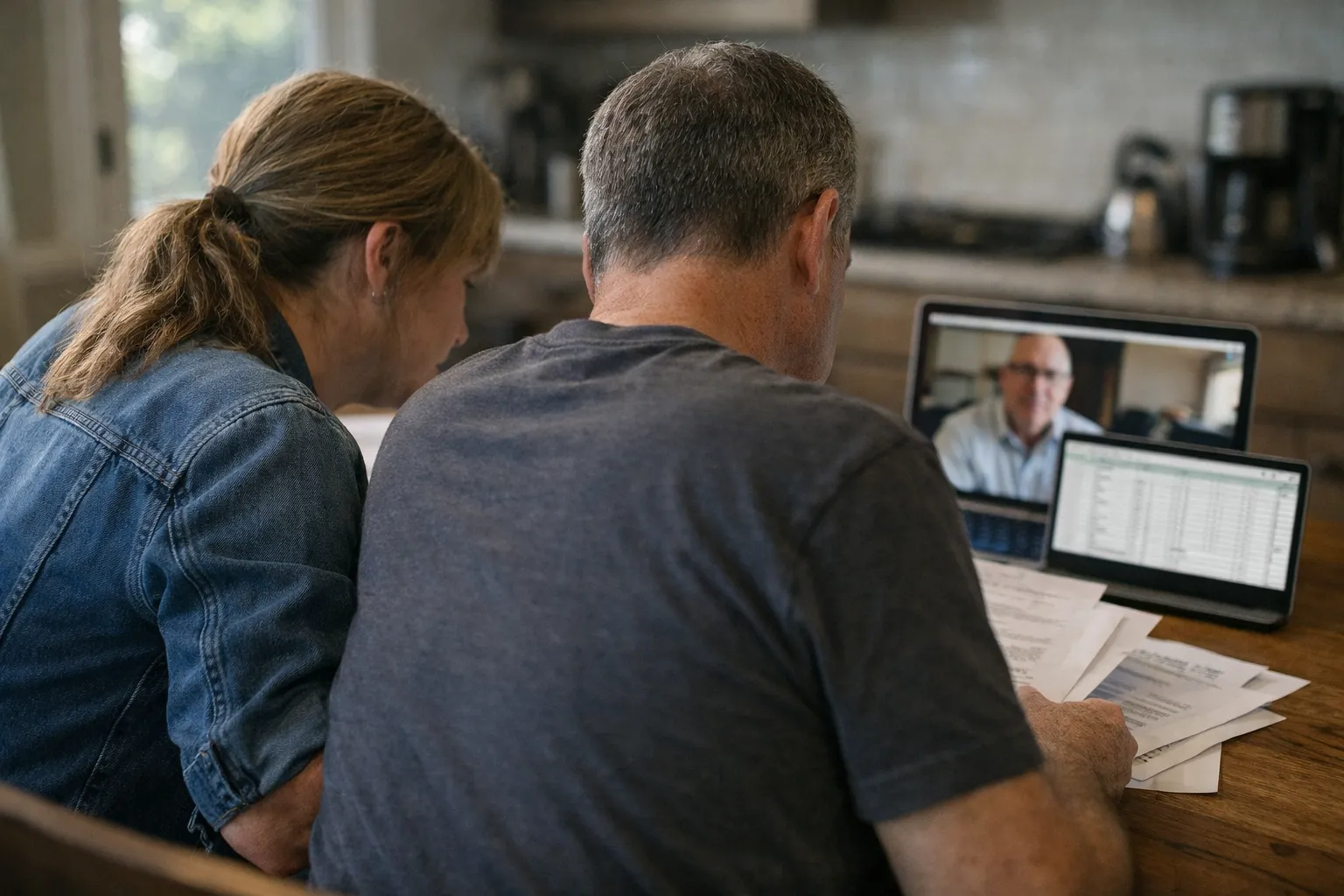
Subjects: “Evan and Mira,” married filing jointly. Evan is a W‑2 engineer; Mira runs a small consulting practice. Their goals: cash out equity for college and diversification, reduce real‑estate concentration, and preserve options to transfer wealth tax‑efficiently to two children.
Property: Single‑family home in San Diego, purchased as an investment in 2014 and rented through calendar 2023. Key numbers:
- Purchase price (2014): $640,000
- Land/building allocation: land $128,000 (20%), building $512,000 (80%)
- Depreciation taken (2014–2023): ≈ $149,000 (straight‑line 27.5 years)
- Owner‑occupied improvements (2024–2025): $62,000
- Sale price (Mar 2026): $1,900,000
- Selling costs: $114,000 (commissions and closing costs)
Challenge
The couple’s specific problem was sequencing: how to convert rental use into a sale that meets near‑term liquidity needs for college, limits tax leakage where possible, and preserves late‑in‑life planning options (step‑up basis) for heirs. Their concrete constraints:
- Large embedded gain. Appreciation since 2014 produced a seven‑figure built‑in gain.
- Depreciation recapture. Depreciation taken while the property was rented is taxable on sale and not eligible for the §121 exclusion.
- Nonqualified‑use rule. Years of nonowner use after Dec. 31, 2008, reduce the fraction of gain eligible for the §121 exclusion on former rentals.
- Estimated‑tax timing and enforcement risk. Large early‑year gains can trigger underpayment penalties and attract greater IRS scrutiny; in 2026 tax practitioners report auditors are expecting digital, timestamped evidence for occupancy and improvements.
Solution
Evan and Mira executed a controlled conversion and sale plan: they moved in, documented owner occupancy with digital evidence, completed capital improvements to raise basis, satisfied the 2‑of‑5‑year use test, and coordinated estimated‑tax and withholding strategy with their CPA. They accepted depreciation recapture as an unavoidable cash cost, applied the pro‑rated §121 exclusion for qualified use, and built a cash‑management plan for proceeds and college expenses.
The tax signals that drove choices:
- Married filing jointly can shelter up to $500,000 under §121 in principle, but nonqualified use and depreciation recapture for former rentals typically shrink the effective benefit.
- Depreciation recapture on real property (unrecaptured §1250) remains taxable at special federal rates (historically up to 25%).
- High‑income sellers must model the 3.8% Net Investment Income Tax (NIIT) and state capital gains taxes when projecting net proceeds—particularly in high‑tax states like California.
- In 2026 practitioners report a continued emphasis on contemporaneous, digital documentation that an auditor can verify quickly (photos with metadata, vendor e‑invoices, utility records, and escrow statements).
Implementation
Step 1 — Scenario modeling (Q4 2023–Q1 2024)
The CPA prepared three models: (A) immediate sale while property remained a rental (no §121 benefit), (B) 1031 exchange into replacement rental real estate (defer but preserve concentration), (C) convert to primary residence, occupy 2+ years, then sell and use the allowable §121 exclusion. Models compared after‑tax proceeds, net cash available for college, projected mortgage balances, potential NIIT, and state tax scenarios. The conversion path balanced liquidity needs and estate flexibility.
Step 2 — Move in and document (Jan 2024)
Move‑in was executed as a planned tax event. Documentation they saved:
- Updated driver’s licenses, voter registration, and mail forwarding records
- Homeowner’s insurance policy switched to owner‑occupied with saved policy and declaration pages
- Utility bills and account screenshots (gas, electric, water) showing service start dates
- Geotagged photos (exterior/interior), calendar entries, and phone location history preserved in a timestamped cloud folder
- Lease termination records and final rent ledgers to show exact rental end
New in 2026: Evan and Mira also captured escrow statements and mortgage payoff/assumption correspondence showing occupancy-related changes and used an electronic notary for a residency affidavit—measures tax practitioners report speed up audit reviews.
Step 3 — Capital improvements and basis substantiation (2024–2025)
The $62,000 in capital improvements (roof and kitchen refresh) were documented with contractor invoices, paid via bank transfer, and matched to building permits where applicable. Their CPA tracked these as basis‑adding items and saved PDFs of contracts, canceled checks, and photos before/after with metadata. In 2026, vendors increasingly provide verifiable e‑invoices with UIDs—preserve those.
Step 4 — List and sell after satisfying the 2‑of‑5 test (Feb–Mar 2026)
- Sale price: $1,900,000
- Selling costs: $114,000
- Net sales figure for gain calculations used: $1,786,000
Step 5 — Coordinate withholding and estimated tax (Q1–Q2 2026)
Because the sale closed in Q1 2026, Evan and Mira used three levers:
- Increased W‑2 withholding on both paychecks so withholding would be treated as if paid evenly through the year (effective for avoiding underpayment penalties)
- Made a sizable Q2 estimated payment aligned with the sale to ensure the safe‑harbor (pay 100% of prior‑year tax or 110% for higher‑income taxpayers) was met
- Worked with their CPA to estimate NIIT and California tax and set payments accordingly
Results
Rounded figures—each taxpayer’s facts differ and state taxes vary.
Gain math (approx.)
- Net sales price: $1,786,000
- Original purchase price: $640,000
- Capital improvements: +$62,000
- Depreciation taken: −$149,000
- Adjusted basis (approx.): $553,000
- Total gain (approx.): $1,233,000
Depreciation recapture and nonqualified use
Depreciation taken ≈ $149,000 — this portion is not excludable under §121 and will be taxable as unrecaptured §1250 gain (federal treatment historically up to 25%). Because they owned the property for ~12 years and lived in it ≈2.25 years, the qualified‑use fraction used for the §121 proration is about 18.75% (2.25 / 12).
- Gain eligible for exclusion (after removing recapture): (1,233,000 − 149,000) × 18.75% ≈ $203,000
- Taxable gain after that exclusion: ≈ $1,030,000 (including ≈ $149,000 recapture)
Illustrative tax burden (San Diego, CA) — approximate
To make the tradeoffs concrete, here is an illustrative federal + California tax picture for the taxable gain (~$1,030,000). This is illustrative only and rounded:
- Unrecaptured §1250 (depreciation recapture) tax (est.): 25% of $149,000 ≈ $37,250 (federal)
- Remaining taxable capital gain ≈ $881,000 taxed at long‑term capital gains rate (federal 20%) ≈ $176,200
- NIIT (3.8%) on net investment income ≈ $39,000
- California tax on the taxable gain (top marginal rate up to 13.3%) ≈ $136,900
- Estimated total tax ≈ $389,350
Net proceeds after those taxes (and ignoring other itemized adjustments) would therefore be materially reduced relative to headline gain—this is why modeling state tax and NIIT matters before choosing a path.
Alternative sequencing considered (updated for 2026)
Three alternatives remain relevant in 2026 and should be modeled alongside conversion then sale:
- Installment sale. Spreads recognition across years and can reduce marginal rate pressure and NIIT timing, but depreciation recapture generally is recognized in the year of sale for certain property—confirm with counsel. Useful if you need steady cash flow rather than one large lump sum.
- Charitable remainder trust (CRT). Donating the property to a CRT before sale can defer immediate capital gains and create an income stream plus a partial charitable deduction; CRTs add complexity and long‑term trust administration considerations for estate plans.
- Partial 1031 into replacement rental followed by conversion. For sellers who want to keep some real‑estate exposure, a 1031 into a diversified portfolio can defer gain on a portion and allow subsequent personal use planning on other assets. 1031 rules remain available for real property but require careful timing and identification rules.
Lessons Learned (June 2026)
- Plan the move‑in as an event, not an afterthought. Contemporary documentation—utility start dates, geotagged photos, homeowner policy changes and updated IDs—matters more than ever in audit reviews.
- Treat depreciation recapture as an unavoidable cash cost unless deferral strategies are used. Budget for it up front; don’t assume §121 will eliminate it.
- Model state tax and NIIT early. For California sellers, state tax can be a larger bite than incremental federal rates—run scenarios for multiple state outcomes.
- Use multiple payment levers to avoid penalties. Combine increased paycheck withholding with estimated payments timed to the sale quarter and confirm safe‑harbor thresholds with your CPA.
- Think multi‑generationally. Compare selling now vs. holding to death for a step‑up in basis. Money needed for college or business diversification can justify selling now; otherwise the step‑up can eliminate built‑in gain for heirs.
Takeaways
- Converting a rental to a primary residence can reduce taxable gain, but for former rentals the nonqualified‑use proration and depreciation recapture usually limit the practical benefit of §121.
- Digital, timestamped documentation is low‑cost risk management—preserve utility records, e‑invoices, geotagged photos and escrow statements in a single cloud folder for your CPA.
- Coordinate withholding and estimated payments to avoid underpayment penalties—use the 100%/110% safe‑harbor tests and model NIIT and state tax exposure.
- Evaluate alternatives (installment sale, CRT, partial 1031) against liquidity needs and estate objectives—each trades immediate tax cost for other risks or complexities.
- Review the plan annually with your CPA and estate attorney; small timing differences can change whether selling now or waiting to transfer at death is the more efficient multigenerational decision.
FAQ
Does meeting the 2‑of‑5‑year test guarantee the full $500,000 exclusion for married couples?
No. Meeting the ownership and use tests is necessary but not always sufficient. For former rentals, the §121 exclusion is prorated by qualified use versus total ownership (the “nonqualified‑use” rule), and depreciation taken while the property was rented is not excluded.
Will depreciation recapture and NIIT be due when I sell after converting?
Generally yes. Depreciation claimed while the property was used as a rental is recaptured and taxed (historically up to 25% federal), and high‑income sellers should model the 3.8% NIIT. State capital gains taxes can add materially to the total tax bill.
What is the best evidence to prove occupancy if I convert a rental?
Use multiple, contemporaneous records: utility account start dates, homeowner insurance showing owner‑occupancy, updated driver’s licenses or voter registration, geotagged photos with metadata, cell‑phone location history, and escrow/mortgage account documents. Save everything in a timestamped cloud folder and keep vendor invoices and permits for improvements.
When should I consider an installment sale or CRT instead of converting and selling?
Consider installment sales if you want to spread taxable recognition and reduce one‑year tax spikes. Consider a CRT if you want partial tax avoidance, an income stream, and a charitable deduction—but expect complexity and trustee costs. Both approaches change recapture timing and estate consequences; model cash needs and probate/estate effects with your advisors.
Has anything in 2026 materially changed §121, recapture or nonqualified‑use rules?
As of June 2026, the statutory treatment of §121, depreciation recapture and the nonqualified‑use proration remains in force. Practitioners in 2026 note heightened enforcement attention and digital documentation expectations—not changes in the underlying rules. Always confirm current law with your CPA or tax attorney before acting.
Disclaimer: This case study uses rounded numbers and generalized tax explanations for education. Tax laws and IRS guidance change; consult your CPA or tax attorney for advice tailored to your facts.